

Evidence-led skincare, described accurately.
GHK-Cu, the copper peptide
A topical copper tripeptide studied for its role in collagen support, skin firmness and tissue repair.
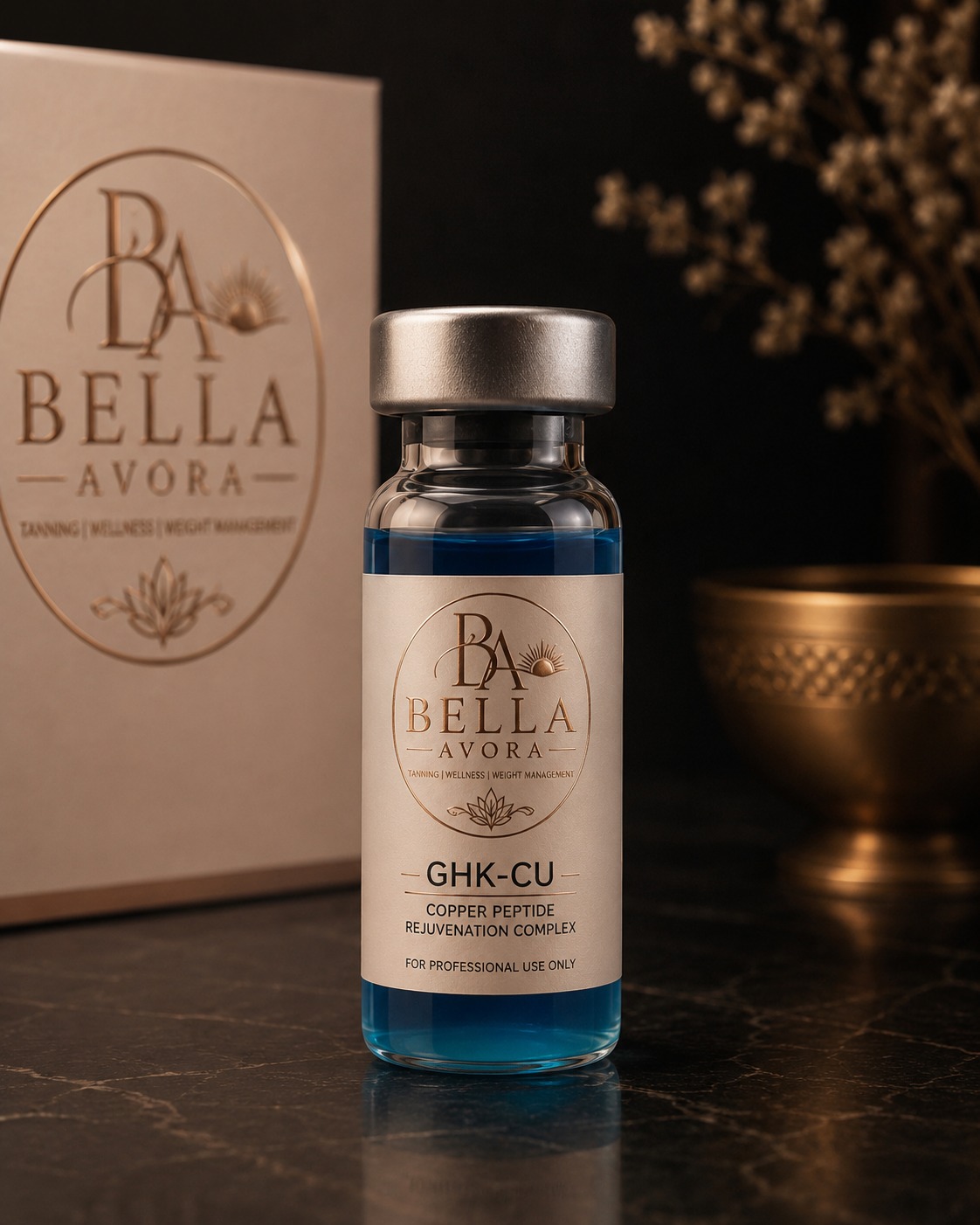
Overview
The honest version.
GHK-Cu — copper tripeptide-1 — is a small, naturally occurring peptide made of three amino acids, glycine, histidine and lysine, bound to a copper ion. It is present in human plasma and tissue, and levels are understood to fall with age.
It has been studied since the 1970s and remains one of the more genuinely interesting ingredients in topical skincare. It is also routinely over-claimed. Here is what the research actually supports, and what it does not.
What matters
The parts that make the difference.
Collagen and elastin support
GHK-Cu has been shown in laboratory and small clinical studies to stimulate processes involved in producing structural proteins that contribute to skin firmness and elasticity.
Tissue repair
It has a long research history in wound healing, where it appears to influence the signalling involved in regenerating damaged tissue.
Inflammatory balance
Studies suggest it helps modulate inflammatory signalling, which may support a steadier healing response rather than a reactive one.
Extracellular matrix remodelling
It can influence the enzymes and pathways involved in breaking down and rebuilding the scaffolding that holds skin together.
Antioxidant activity
Research points to effects on oxidative stress and on the cellular signalling involved in tissue maintenance.
Step by step
How it runs.
Patch test
As with any active, test on a small area for 24 hours before using it on your face.
Apply to clean skin
Copper peptides go on after cleansing and before heavier occlusives, on slightly damp skin.
Keep the routine simple
Avoid layering directly with strong acids or high-strength vitamin C in the same application — separate them by time of day.
Seal it in
Follow with a moisturiser to hold everything in place.
Give it twelve weeks
Structural change in skin is slow. Most published work runs over eight to twelve weeks before meaningful change is measured.
Local
GHK-Cu Copper Peptide near you.
FAQ
Common questions
Is GHK-Cu a medicine?
No. Used topically it is a cosmetic ingredient. It is not licensed to treat, cure or prevent any medical condition, and nothing here should be read as a medical claim.
Will it replace retinol?
No. They work differently and the evidence base for retinoids in photoageing is far larger. Many people use both, at different times of day.
Can I use it with vitamin C?
Not in the same layer — the two can destabilise each other. Vitamin C in the morning, copper peptides at night is the usual approach.
Does the blue colour matter?
The blue tint comes from the copper complex itself. It is normal, and it washes out.
Is it safe in pregnancy?
There is not enough evidence either way, so the sensible answer is to check with your midwife or GP before using any active skincare in pregnancy.
Medical information notice. Everything on this website is general information, not personal medical advice. Prescription-only medicines are supplied solely against a prescription issued by a registered independent prescriber following consultation, and dispensed by a registered pharmacy. If you are unwell, contact your GP or NHS 111. In an emergency, call 999.

Get in touch
Talk it through first
No obligation and no hard sell — a straight conversation about whether what we do is right for you, and what it would involve.